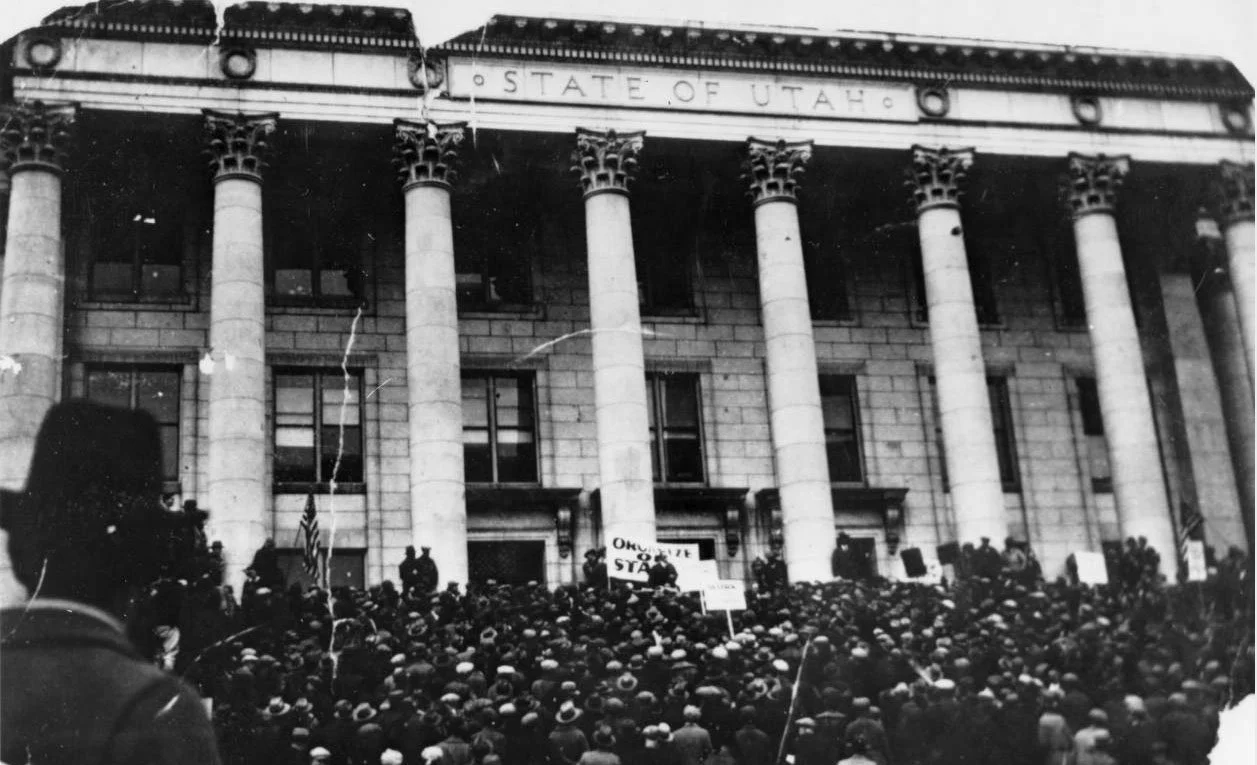
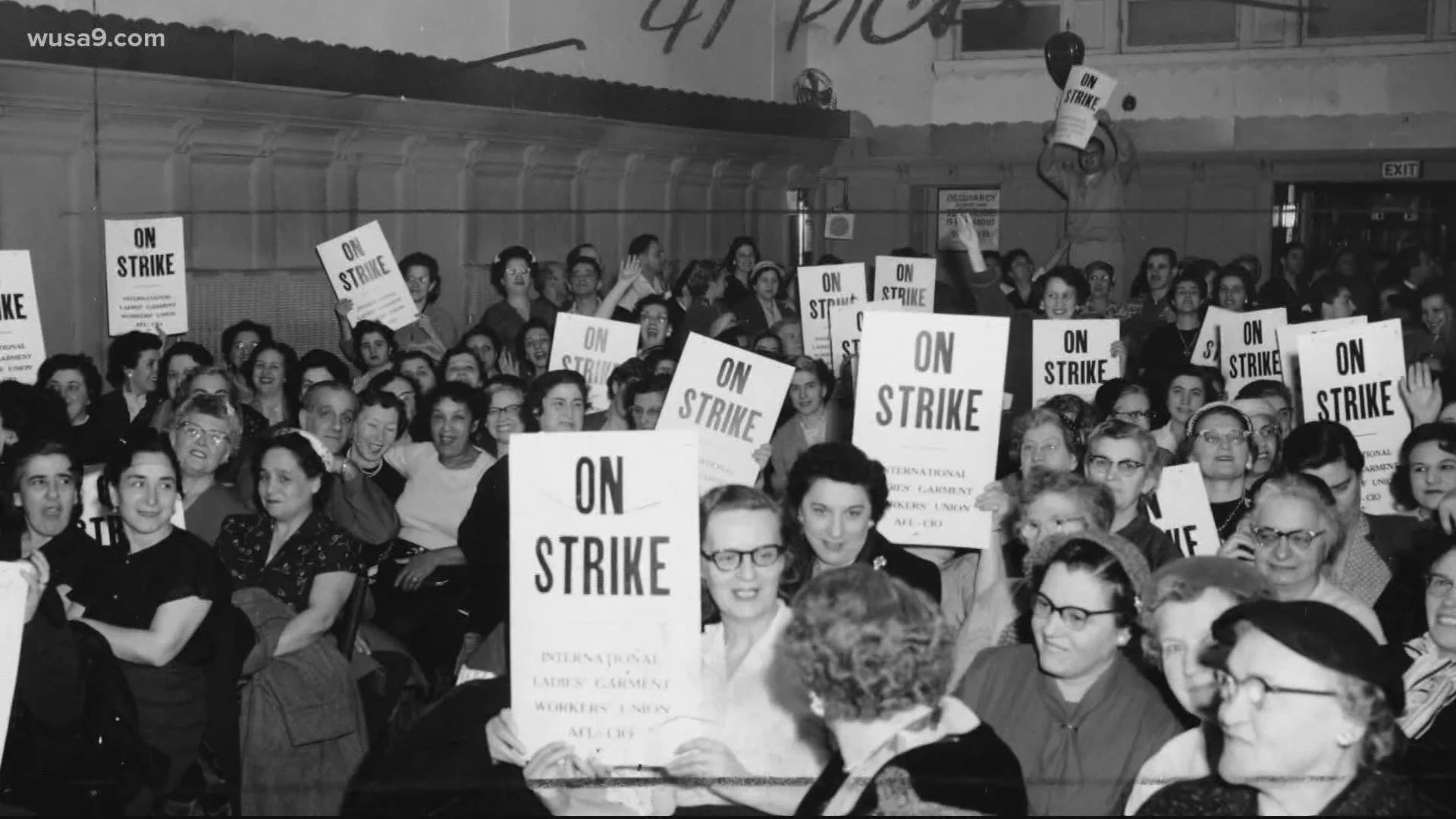
renters
✷
workers
✷
renters ✷ workers ✷
Fight for Renters and workers
The Problem
For far too long, our society has favored people with the most money and connections.
The rules are stacked in favor of the ultra-wealthy: corporate landlords, giant developers, and big business. It’s time we make the rules work for everyday Utahns instead.
Ordinary Utahns, not the elites, make Utah run. Productivity is at an all-time high, yet more and more people need multiple jobs to afford necessities. While Utah becomes a better place for Silicon Slopes, it ranks 37th in the nation for renters and 46th for workers. Utah doesn’t care about renters or workers, and it’s time we change that.
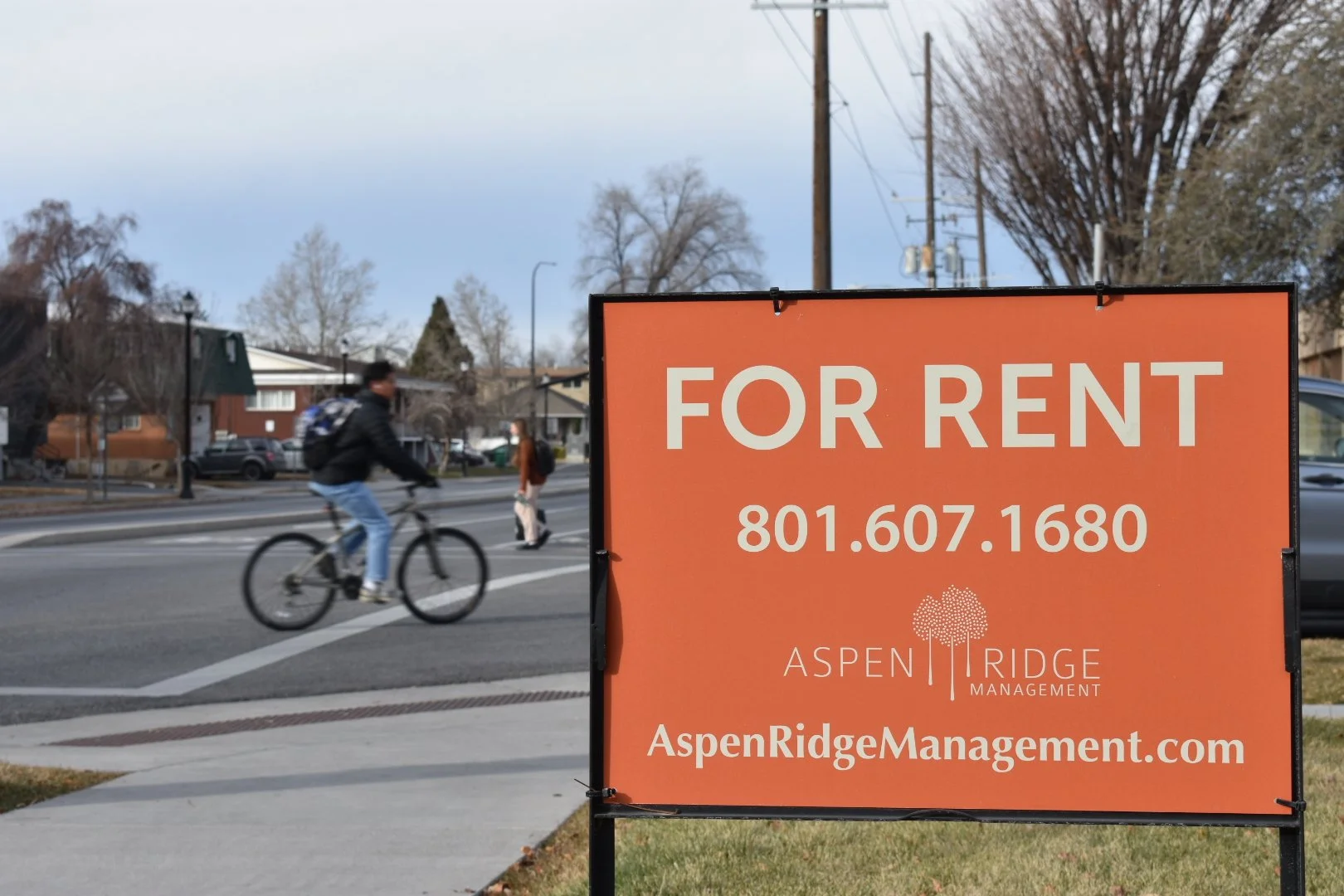
① Pass a Renters’ Bill of Rights
The National Low Income Housing Coalition, National Housing Law Project, and Tenant Union Federation have created a National Tenants’ Bill of Rights to address the power imbalance between renters and landlords.
I support the principles in the National Tenants’ Bill of Rights and will fight for one tailored to Utah. I believe in good policies that reward good landlords and hold bad landlords accountable. I want to put an end to large, impersonal property management offices and corporate landlords.
-
I will fight to establish the Office of Renters’ Rights under the Governor to enforce the Utah Renters’ Bill of Rights and other renter protections, such as the Utah Fair Housing Act and the Utah Fit Premises Act.
This office will serve as a free, one-stop resource for any renter (residential or commercial, with or without a lease) seeking support in enforcing the law. I will also establish a free legal hotline for renters experiencing violations of their rights.
-
Ban rental application fees
Require landlords to provide applicants with a copy of the Utah Renters’ Bill of Rights (once passed)
Require landlords to disclose all fees on one page, before a renter applies to live there
Banning application fees eliminates the risk that renters will waste money just to be turned down. This way, landlords will want to accept applicants, not deny them just to collect fee after fee.
-
Ban unreasonable and predatory lease terms, such as: waivers of legal rights, evictions for minor lease violations, unreasonable rules limiting guests, pets, or behavior
Limit security deposit amounts to 2 months’ rent
Requiring landlords to justify rent increases should make more tenants feel that the rent is reasonable. Prices should also adjust more fairly and stabilize the market.
-
Enforce the Utah Fair Housing Act
Enable renters to report discriminatory housing practices or harassment to my new Renter’s Rights Office
I will fight to add the following to Utah Law
-
Enforce the Utah Fit Premises Act
Enable renters to report poor housing conditions to my new Renters’ Rights Office
-
Require landlords to justify rent increases
Give renters the ability to appeal a rent increase to the Office of Renters’ Rights if the rent increase is not well-justified
-
Formally recognize tenant unions
Task the Office of Renters’ Rights with recognizing tenant unions, helping tenants and landlords negotiate agreements, and enforcing those agreements.
Formalized tenant unions have more power to educate and connect tenants who would otherwise fight alone.
-
Currently, the eviction process can begin after only 3 days of nonpayment. I will fight to give renters more time.
Extend the deadline to move out after an eviction notice from 3 days to one week
Remove first-time evictions from public record
Making evictions less brutal provides tenants space to secure a new place and reduces the chance they become homeless or get put in predatory housing situations.
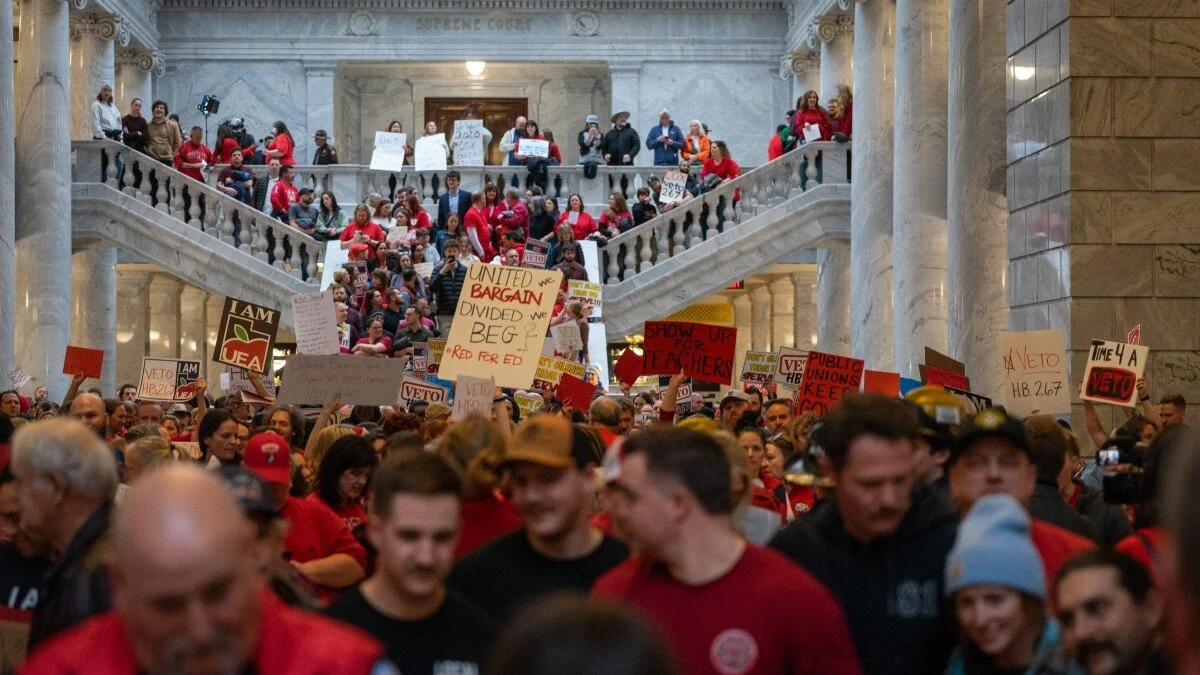
② Pass a Workers’ Bill of Rights
Utah is nicknamed “The Beehive State” for a reason. Utah ranks high in many job measures, from employment and education rates to worker productivity to economic strength. This is because of our hard-working employees, in all positions and across all sectors, despite the state’s current labor laws, which place Utah 46th in labor rights. Worker protections result in a more stable economy, more productivity, higher economic growth, and less income inequality. We need to invest in our workers.
I will fight to add a Workers’ Bill of Rights to Utah law. This set of rights will give workers a clear, accessible, and enforceable path to seek fair treatment in their jobs. I will also fight to ensure that every worker receives a copy upon hire.
Below, I list my proposed reforms, but I will work with Utah workers, labor unions, and my colleagues in the legislature to create a version that best protects workers.
-
I will fight to establish the Office of Workers’ Rights within the Governor's office to enforce the Utah Workers’ Bill of Rights and other worker protections.
This office will serve as a free, one-stop resource for any worker (union, nonunion, independent contractor, employee) to access enforcement of the law. I will also establish a free legal hotline for workers experiencing violations of their rights.
Every worker will be able to enforce the law without hiring a lawyer or waiting for lengthy court proceedings.
-
Require certain job postings to include an accurate pay range and job description.
Ban “ghost jobs,” or job ads that employers don’t intend to hire for.
Ban questions about past salary, employment gaps, and nonviolent criminal history.
-
Set the tipped minimum wage and minimum unemployment benefits closer to the minimum wage.
Allow cities to set a higher minimum wage than the state standard.
Require state projects to pay the prevailing wage of the industry.
-
Require extra pay for last-minute call-ins.
Require extra pay for split shifts.
Provide paid pumping breaks for breastfeeding workers.
I will fight to add the following to Utah Law
-
Extend worker safety regulations to domestic workers.
Provide a heat safety standard for outdoor workers.
Provide protections for warehouse workers.
-
Establish standardized time-off expectations for full and part-time workers.
Allow workers to have unpaid time off without notice.
Require the impartial enforcement of employers’ time-off policies.
-
Establish a constitutional right for all workers, public or private, to organize, unionize, and collectively bargain.
Ban any law that prohibits any employers from recognizing unions or bargaining with them.
Protect workers against retaliation for organizing or striking.
③ Strengthen Union Power
Utah has one of the lowest union participation rates in the nation. In 2023, only about 4.1% of Utahns participated in a union, compared to the average of 10.1%. Part of the reason is that Utah is a right-to-work state, meaning workers can access union benefits without paying dues, thereby weakening the union’s resources.
Additionally, the Utah Legislature passed HB 267 in 2025, which “prohibits a public employer from recognizing a labor organization as a bargaining agent for public employees.” This bill was so unpopular that lawmakers repealed it after unions quickly gathered sufficient signatures to force a referendum.
Unionizing is fundamental to our identity as a country. Unions have given us higher pay, overtime pay, benefits, PTO, safer working conditions, and much more. In August 2025, 62% of Americans surveyed said that the decrease in Union membership has been bad for working people, and I agree. Ever since we kneecapped unions in the 80s, more and more money has been going to the wealthy; decline in union membership mirrors income gains of the top 10%. We should fight for everybody to have the opportunity to unionize and empower them with the knowledge of how to do so.
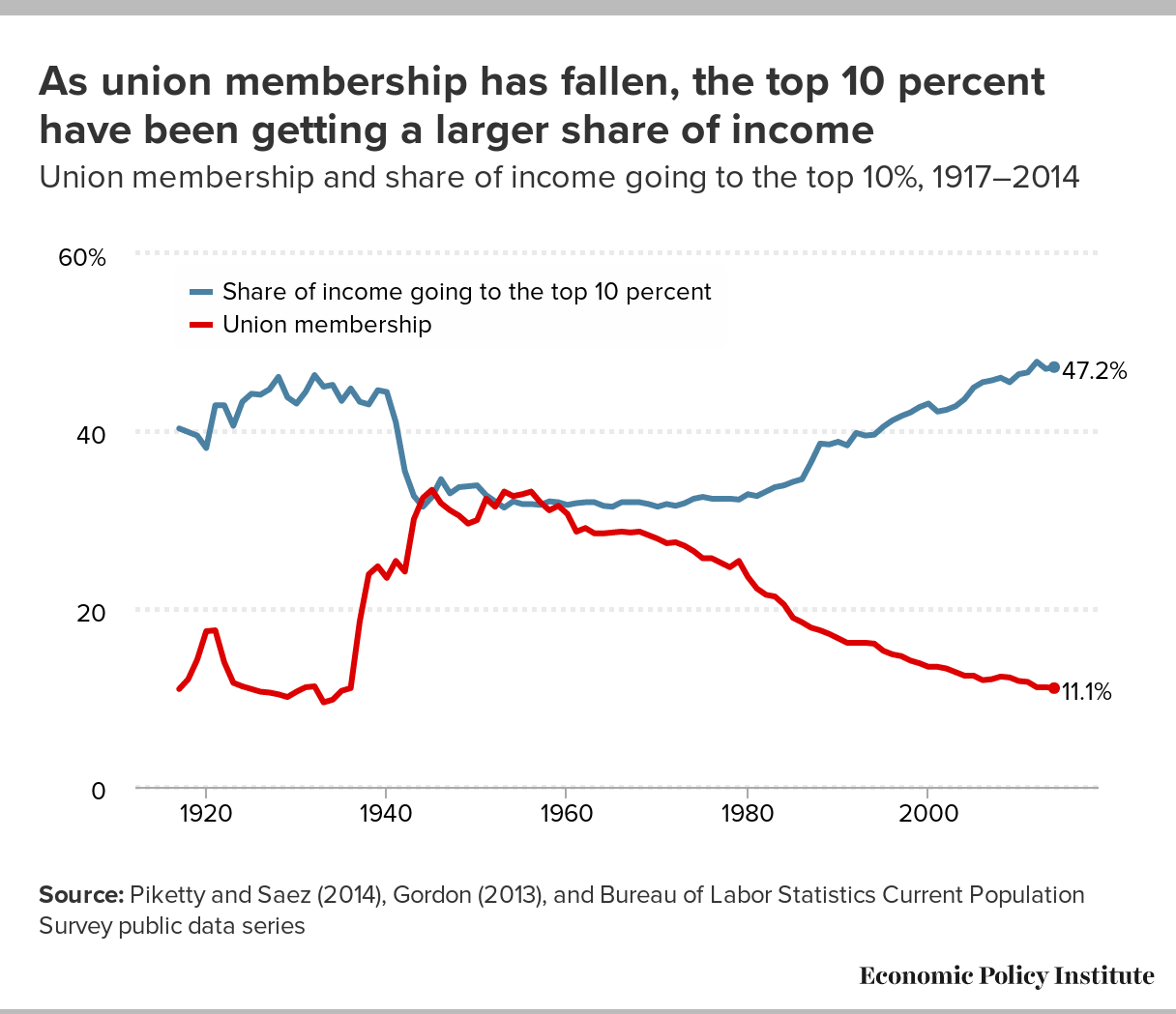
My goal is to give workers a better way to band together for better conditions.
More union participation results in higher wages and stronger democracy.
Unions create a stronger, more stable workforce.
Public workers will be able to hold their employer, the government, accountable, just like the private sector does.
Unionization can result in lower turnover and greater efficiency and productivity.
Unions boost worker satisfaction and, in turn, economic activity.
Undergraduate education on unions means people will know how to unionize as they join the workforce.